
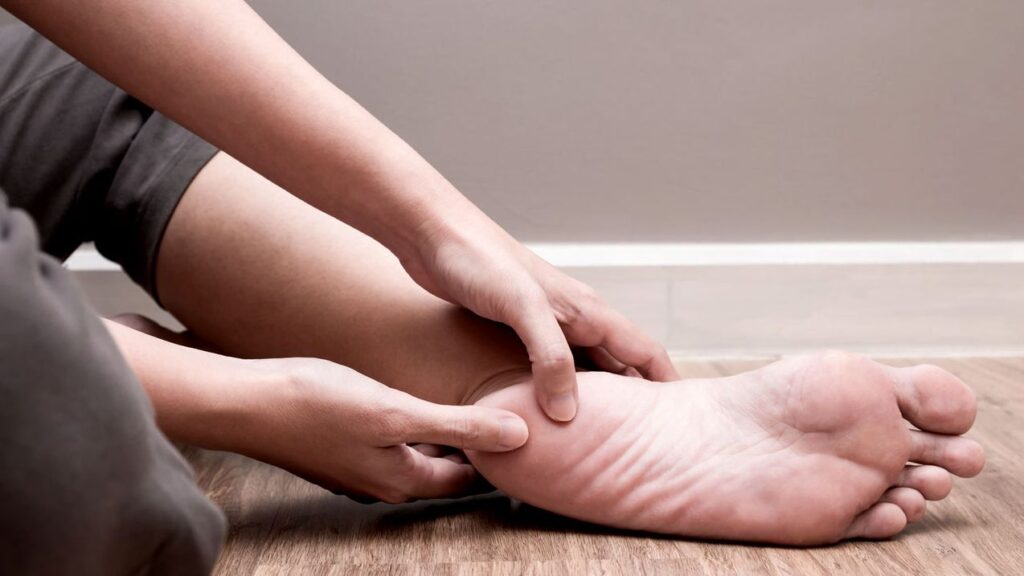
Plantar Fasciitis- causes and treatment
The plantar fascia is a thick band of connective tissue running along the bottom of the foot, connecting the heel bone to the toes. It supports the arch and plays a key role in absorbing shock during walking or running. During long periods of standing or running it can become inflamed and painful. it is the major cause of heel pain.
Causes of Plantar Fascia Pain (Plantar Fasciitis)
Plantar fasciitis occurs when excessive stress or microtears develop in the fascia due to overuse, poor biomechanics, or inadequate support.
Common causes and contributing factors include:
1. Mechanical/Structural Factors
Flat feet (pes planus), high arched feet (pes cavus) leading to uneven ground force distribution
Tight calf muscle group or tight achilles tendon, increasing tension on the fascia
2. Overuse or Load-Related Factors
Prolonged standing or walking, especially on hard surfaces
Sudden increase in activity level (e.g., new exercise routine)
High-impact activities like running or jumping
Inadequate rest or recovery
3. Footwear and Surfaces
Shoes lacking arch support or cushioning
Worn-out footwear
Walking barefoot on hard surfaces
4. Other Contributing Factors
Recent increase in weight (adds load to the fascia)
Age – more common between ages 40–60 as connective tissue loses it’s elasticity
Occupation – jobs involving long hours standing (e.g., hairdressers, labourers, security gaurds)
Medical conditions– occasionally linked with inflammatory diseases (e.g., rheumatoid arthritis)
Treatment Options
Treatment focuses on reducing inflammation, relieving pain, improving biomechanics, and preventing recurrence.
1. Initial Conservative Treatments
Rest/modify activities – Ease back on activities such as prolonged standing or running.
Ice treatment- Apply ice for 10–15 minutes several times after activities to reduce inflammation.
Anti – inflammatory medication – NSAIDs (e.g., ibuprofen, naproxen) can help with pain and inflammation to be taken temporarily.
Footwear – Supportive shoes with cushioned soles and firm arch support. Hyde Park Podiatry will help find you the right shoe for your foot type.
Functional custom made orthotics- Reduce stress on the fascia and addresses biomechanics issues. (preferred longer term treatment option)
2. Stretching and Strengthening
Calf and plantar fascia stretches several times daily.
Rolling the arch over a frozen bottle or massage ball.
Strengthening intrinsic foot muscles.
3. Physical Treatments
Functional custom made orthotics – Tailored support for biomechanical issues.
Taping/strapping – Short-term relief by reducing fascia strain.
Manual therapy – Foot mobilisation techniques to release dysfunctional joints and soft tissues
Shockwave therapy – For chronic or resistant cases.
4. Advanced or Medical Interventions
Corticosteroid injections – Can relieve pain but may risk tissue weakening if repeated. More effective with functional custom made orthotics
Platelet rich plasma injections (PRP) – May promote healing in chronic cases.
Night splints – Keep the foot dorsiflexed overnight to stretch fascia and Achilles tendon.
Surgery (very rare) – Partial plantar fascia release for cases unresponsive to all conservative care (after 9–12 months).
🦶 Prevention Tips
Maintain healthy body weight.
Wear supportive shoes (avoid flat, hard soles).
Stretch calves and plantar fascia regularly, especially before activity.
Replace running regularly.
Avoid sudden increases in exercise intensity.